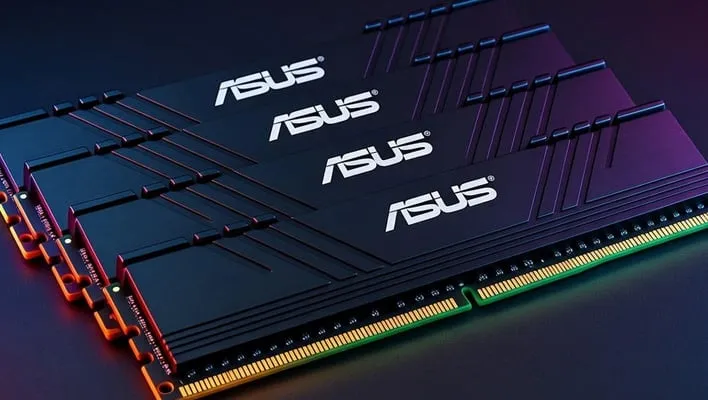
Amid sustained increases in global RAM prices and ongoing supply constraints, rumors surfaced this week claiming ASUS was preparing to enter the DRAM manufacturing market. The speculation, which spread rapidly across tech media and forums, suggested the company was exploring in-house memory production to counter shortages. ASUS has since denied the claims, reaffirming that it has no plans to manufacture DRAM chips.
How the ASUS Rumor Emerged
The reports originated from a regional technology outlet, which cited unnamed sources claiming ASUS was considering launching DRAM production as early as 2026. The story gained traction due to the severity of the current memory market conditions and ASUS’s position as one of the world’s largest PC and motherboard manufacturers.
With DDR5 prices continuing to rise and availability tightening, the idea of a major OEM stepping into memory production resonated with frustrated consumers and system builders, particularly in the gaming and DIY PC segments.
ASUS Responds
ASUS has officially rejected the rumor, stating that it has no intention of investing in DRAM wafer fabrication. In statements reported by multiple international outlets, the company emphasized that memory manufacturing requires extensive capital expenditure, advanced semiconductor expertise, and long-term operational commitments that fall outside its strategic focus.
The company reiterated that it will continue sourcing memory through established suppliers rather than vertically integrating into chip fabrication.
Global RAM Shortage: The Bigger Picture
The rumor unfolded against a backdrop of a prolonged global memory imbalance. DRAM prices — especially for DDR5 — have surged due to a combination of factors:
- The rapid expansion of AI data centers is consuming vast amounts of memory
- Increased production of High Bandwidth Memory (HBM) for AI accelerators
- Limited capacity growth for consumer-grade DRAM
The DRAM market remains dominated by Samsung Electronics, SK Hynix, and Micron, whose production decisions heavily influence global pricing and availability.
Impact of rising memory prices on consumers and gamers
For consumers, rising memory prices have translated directly into higher PC build costs. RAM, once a relatively stable component, has become a significant price driver in mid-range and high-end systems. Gamers upgrading to DDR5 platforms face increased entry costs, particularly when combined with higher CPU and motherboard prices.
Laptop pricing has also been affected, as OEMs absorb higher component costs or pass them on to end users. Entry-level and mid-range systems are especially sensitive to these increases, impacting affordability in price-conscious markets.
Enterprise and OEM Implications
On the enterprise side, memory shortages are affecting server procurement and infrastructure planning. Data centers, cloud providers, and enterprises deploying AI workloads are competing directly with consumer markets for DRAM supply, driving up contract prices.
OEMs such as ASUS must navigate this environment by optimizing configurations, negotiating long-term supply agreements, and managing inventory risks. The inability of major brands to easily secure memory at stable prices has also compressed margins in certain product categories.
Market Reality Check
While ASUS is a global hardware leader, industry analysts note that entering DRAM manufacturing would place it in direct competition with highly specialized semiconductor giants. The high barriers to entry make new players unlikely, even amid sustained shortages.
Instead, most OEMs are expected to continue adapting through supply chain diversification and strategic sourcing rather than attempting full vertical integration.
Outlook
The global RAM market is expected to remain tight through 2026, with pricing relief dependent on capacity expansion and a slowdown in AI-driven demand. ASUS’s denial reinforces a broader industry reality: despite growing pressure on consumers, gamers, and enterprises, memory manufacturing remains concentrated in the hands of a few specialized players, leaving the rest of the ecosystem to absorb the impact.