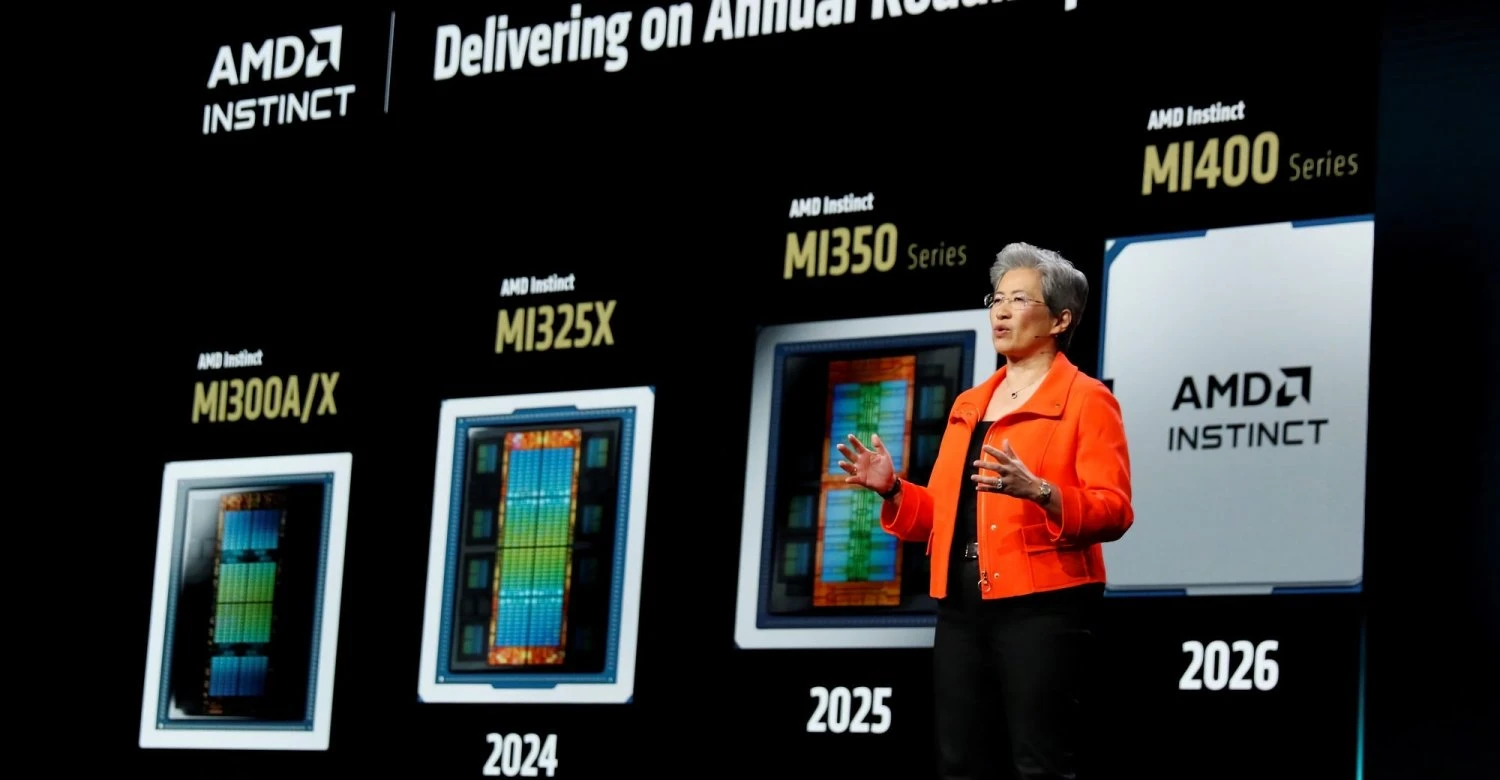
AMD stormed into Financial Analyst Day 2025 and didn’t just announce products, it declared a challenge. Zen 6 on 2 nm. Zen 7 on the horizon. Instinct MI400 is ready to shake up AI computing, no hints, no tentative steps.
AMD made it clear that the company is not here to follow; it’s here to set the pace. The roadmap is audacious, the ambitions unmistakable, and the message to Intel and NVIDIA simple: the next era of computing is being written in silicon, and AMD intends to write it first.
Zen 6 is where that ambition takes tangible form. Built on TSMC’s cutting-edge 2 nm process, it will anchor AMD’s 2026 lineup. EPYC “Venice” will power data centres. Ryzen “Olympic Ridge” will redefine desktops. And “Medusa Point” will push mobile performance to new levels. AMD didn’t reveal every core count or micro-detail. That wasn’t necessary.
The promise is clear: higher efficiency, deeper AI integration, and a platform designed for tomorrow’s workloads.
Zen 7 follows as the natural escalation, a successor already in AMD’s sights. While specifics remain under wraps, its presence on the roadmap sends a signal: the company isn’t just iterating. It’s building a sustained momentum that will carry into 2027 and beyond, ensuring that every CPU generation is part of a continuous leap forward.
Then came the shift from raw processing to intelligence itself. AMD confirmed the Instinct MI400 family, purpose-built for AI and high-performance computing, paired with the Helios system reference for full-stack deployment. No final FLOPS numbers, no bandwidth figures, just a clear message from AMD that it intends to compete not just with chips, but with complete AI infrastructure, taking the fight directly to NVIDIA.
And the MI500 generation is already in design, proving this isn’t a one-year sprint; it’s a marathon strategy aimed at owning the AI era.
Taken together, AMD’s announcements signal more than new hardware. They are a declaration of intent. Zen 6 pushes them into a 2 nm future. Zen 7 ensures the momentum doesn’t pause.
MI400 stakes a claim in AI. Helios redefines systems thinking. And through it all, AMD is sending a single, unmistakable message: the future belongs to those who don’t just make chips, they shape the world those chips will power.