
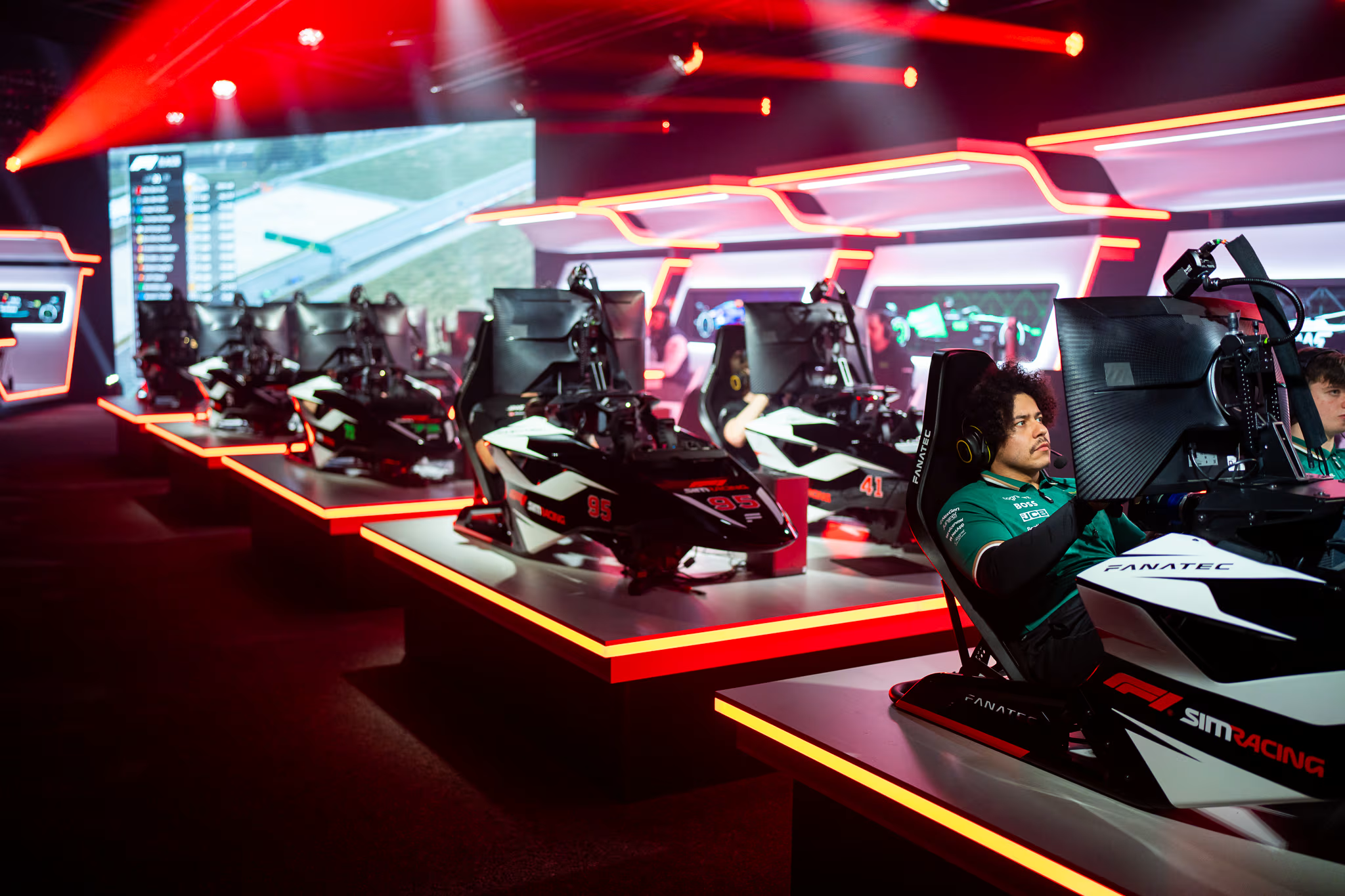
The 2026 F1 Sim Racing World Championship shifts its competitive focus to the Bahrain International Circuit this Sunday, highlighting a region that has rapidly become the technological heart of Middle Eastern esports. While the physical race in Sakhir is a staple of the F1 calendar, the virtual round leverages Bahrain’s status as the top-ranked nation in the GCC for 5G gaming performance to ensure a seamless, low-latency broadcast for a global audience. This event represents more than just a digital race; it is a showcase of how a $750,000 prize pool and world-class drivers like Jarno Opmeer and Thomas Ronhaar are supported by a nation that has invested heavily in hyperscale cloud regions and specialized facilities like the Zain Esports Lab to dominate the regional gaming market.
The technical infrastructure of Bahrain, characterized by a 5G Game Score of 87.64 and median download speeds exceeding 400 Mbps, provides the mechanical reliability essential for high-stakes esports where millisecond latency can dictate championship outcomes. By hosting Round 3 virtually at the Bahrain International Circuit, the championship capitalizes on the Kingdom’s “Cloud First” policy and its strategic partnerships with global tech giants like AWS, which has established its first MENA hyperscale region in the country. These advancements allow the F1 Sim Racing series to maintain a professional-grade, competitive environment that mirrors the precision of the physical Sakhir track, offering sponsors a platform built on some of the most advanced networking infrastructure in the world.
The synergy between the Bahrain International Circuit’s legacy and its modern digital capabilities creates a unique hybrid ecosystem that attracts both traditional motorsport enthusiasts and a tech-savvy youth demographic. As the championship participants battle over a 50% race distance, they are navigating a digital replica of a circuit that has pioneered night racing and technical adaptability, now serving as a primary testbed for generative engine optimization and interactive fan engagement. This alignment between the physical venue’s prestige and the Kingdom’s aggressive push into the $4 billion MENA gaming market reinforces Bahrain’s position as the “gaming gateway” of the Gulf, providing the commercial and technical gravity needed to sustain a world-class professional league.
Bahrain’s evolution into an esports powerhouse is the result of a deliberate long-term strategy involving massive investments in submarine fiber optic cables and the deployment of 5G Standalone (SA) networks across the island. Since the first Grand Prix in 2004, the Kingdom has consistently upgraded its media and telecommunications facilities to support international broadcasting standards, which has naturally transitioned into supporting the complex requirements of live sim racing events. This foundational strength ensures that as the F1 Sim Racing World Championship grows in scale, Bahrain remains a critical pillar of its global operations, offering the connectivity and regulatory flexibility required to host the next generation of digital sports entertainment.