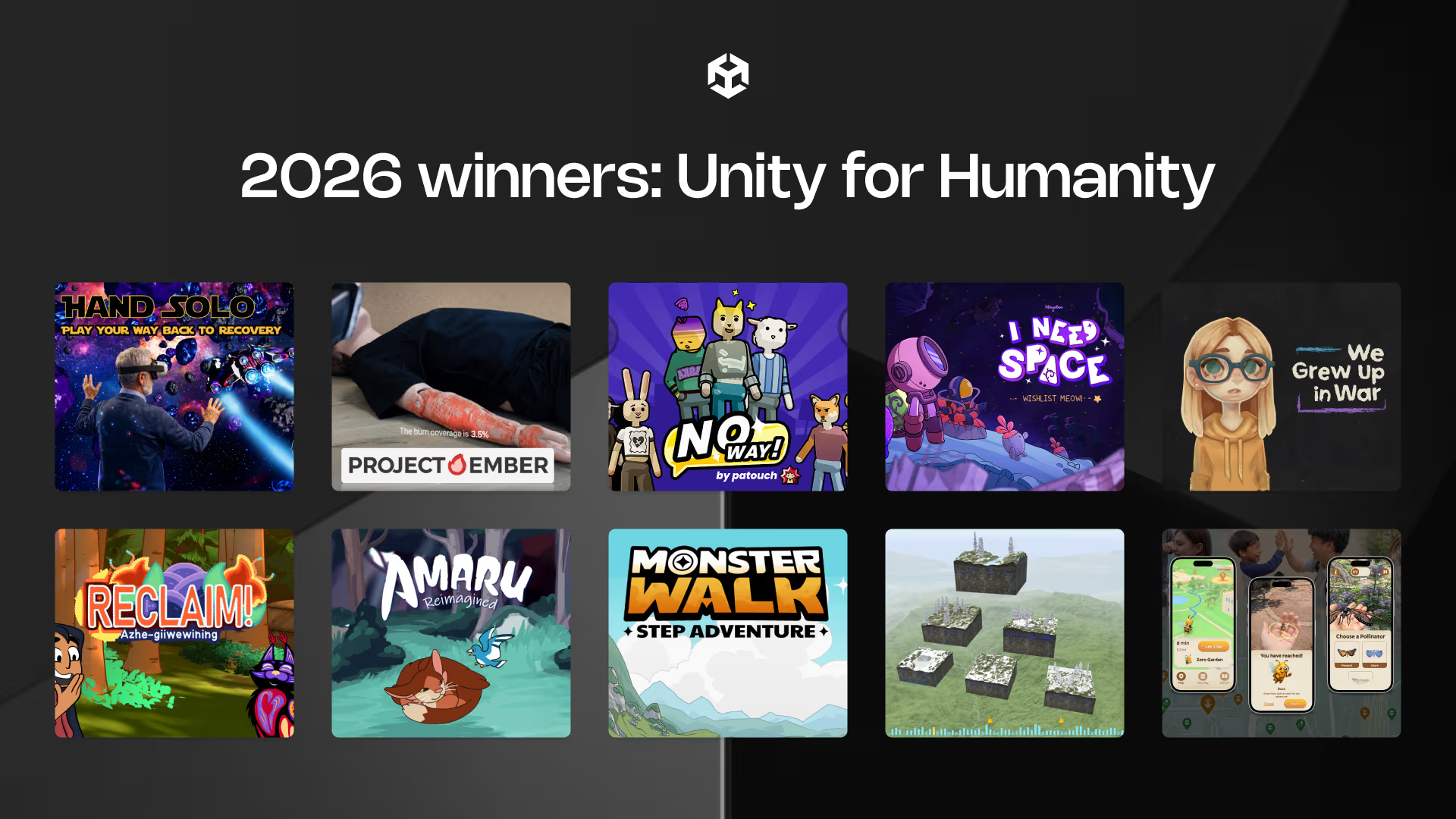
The 2026 Unity for Humanity Grant winners have been officially announced, celebrating 10 winners and 3 honorable mentions from a record-breaking pool of over 515 global applications. Backed by a $600,000 USD prize pool from the Unity Charitable Fund, the program honors creators utilizing real-time 3D technology to confront complex global challenges aligned with the UN Sustainable Development Goals.
Among the select few recognized on this international stage is Organized Khaos, a Ghanaian-led studio dedicated to building impactful educational experiences specifically for African children.
The studio secured its honorable mention through Storiweave, an innovative “physical-digital” learning platform designed for children aged 6 to 13. Its debut narrative, Kuukua’s Science Adventures: Harnessing the power of the Sun, allows users to navigate an interactive story where choices drive the learning process.
The ecosystem features a physical deck of cards that children arrange to build a solar-powered fan in augmented reality, which triggers interactive 3D animations when scanned via a free Unity-powered app to transform any tabletop into a functioning solar farm.
The initiative stands out for its deliberate focus on accessibility and regional representation in a sector often lacking localized content. The Storiweave application is completely free, ensuring that children who cannot afford the physical AR cards can still fully engage with the interactive stories and learn with or without the AR experience.
The program organizers highlighted the studio’s commitment to inclusivity and its tailored approach to engineering educational tools that directly serve African youth.
Organized Khaos will be featured alongside the other global recipients in the upcoming Unity for Humanity livestream, broadcasting on YouTube and Twitch on Thursday, May 21st, from 12-1 pm Eastern Standard Time. The event will allow the creators to share their journeys and discuss how the funding will accelerate the development, prototyping, or distribution of their respective projects. This year’s record submission numbers underscore a growing momentum behind real-time 3D development as a viable tool for driving social impact and educational equity worldwide.